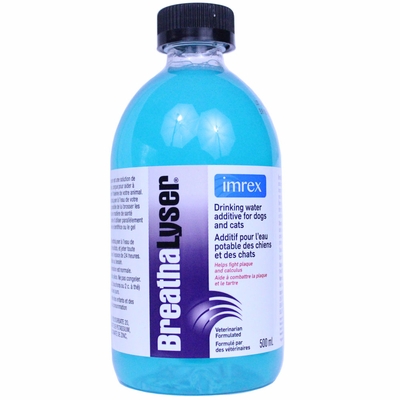
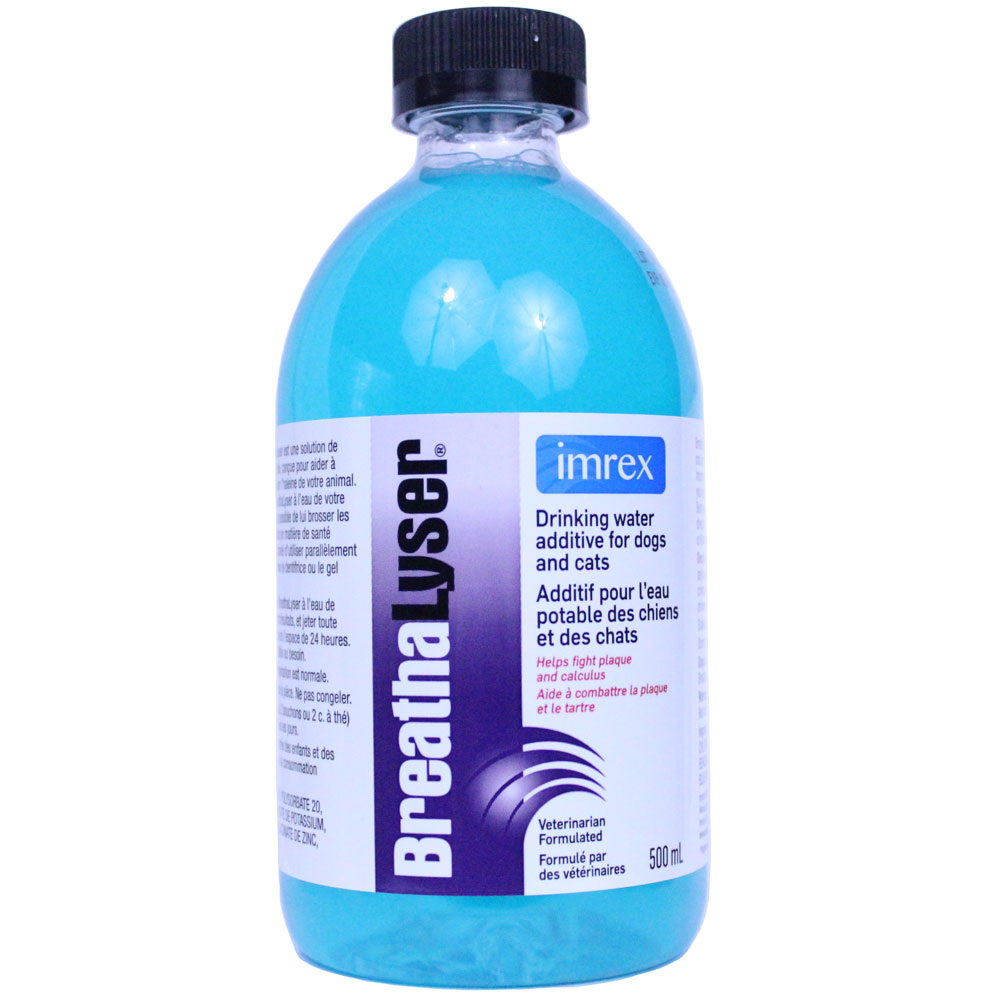
Breathalyser® Drinking Water Additive is a pleasant-tasting solution for effective at-home dental hygiene care. It helps maintain oral health while reducing the sources of foul smelling breath. Unlike direct application products, it is simply added to the pet's drinking water each day.Safe and effective for dogs & cats.
Key Benefits:
No brushing required
Reduces sources of halitosis, does not just mask bad breath
?Easy-to-use for busy multi-pet households and elderly pet owners
Improves at-home dental compliance
Reformulated with NO Xylitol
Note: Short Dated Sale! Product is Best Used By 11/21. All Sales Are Final. Buy 3 6oz Bags with Discount Automatically Applied at Checkout.
Compare to:$14.99
Price too low to show
Add to cart to see low price
Note: Short Dated Sale! Product is Best Used By 11/21. All Sales Are Final. Buy 3 6oz Bags with Discount Automatically Applied at Checkout.
Breathalyser® Drinking Water Additive is a pleasant-tasting solution for effective at-home dental hygiene care. It helps maintain oral health while reducing the sources of foul smelling breath. Unlike direct application products, it is simply added to the pet's drinking water each day.Safe and effective for dogs & cats.
Key Benefits:
No brushing required
Reduces sources of halitosis, does not just mask bad breath
?Easy-to-use for busy multi-pet households and elderly pet owners
Improves at-home dental compliance
Reformulated with NO Xylitol
Note: Short Dated Sale! Product is Best Used By 11/21. All Sales Are Final. Buy 3 6oz Bags with Discount Automatically Applied at Checkout.
Compare to:$23.99
Price too low to show
Add to cart to see low price
Note: Short Dated Sale! Product is Best Used By 11/21. All Sales Are Final. Buy 3 6oz Bags with Discount Automatically Applied at Checkout.
Breathalyser® Drinking Water Additive is a pleasant-tasting solution for effective at-home dental hygiene care. It helps maintain oral health while reducing the sources of foul smelling breath. Unlike direct application products, it is simply added to the pet's drinking water each day.Safe and effective for dogs & cats.
Key Benefits:
No brushing required
Reduces sources of halitosis, does not just mask bad breath
?Easy-to-use for busy multi-pet households and elderly pet owners
Improves at-home dental compliance
Reformulated with NO Xylitol
Note: Short Dated Sale! Product is Best Used By 11/21. All Sales Are Final. Buy 3 6oz Bags with Discount Automatically Applied at Checkout.
Compare to:$70.99
Price too low to show
Add to cart to see low price
Note: Short Dated Sale! Product is Best Used By 11/21. All Sales Are Final. Buy 3 6oz Bags with Discount Automatically Applied at Checkout.
Breathalyser® Drinking Water Additive is a pleasant-tasting solution for effective at-home dental hygiene care. It helps maintain oral health while reducing the sources of foul smelling breath. Unlike direct application products, it is simply added to the pet's drinking water each day.Safe and effective for dogs & cats.
Key Benefits:
No brushing required
Reduces sources of halitosis, does not just mask bad breath
?Easy-to-use for busy multi-pet households and elderly pet owners
Improves at-home dental compliance
Reformulated with NO Xylitol
Note: Short Dated Sale! Product is Best Used By 11/21. All Sales Are Final. Buy 3 6oz Bags with Discount Automatically Applied at Checkout.
Compare to:$140.99
Price too low to show
Add to cart to see low price
Note: Short Dated Sale! Product is Best Used By 11/21. All Sales Are Final. Buy 3 6oz Bags with Discount Automatically Applied at Checkout.
Breathalyser® Drinking Water Additive is a pleasant-tasting solution for effective at-home dental hygiene care. It helps maintain oral health while reducing the sources of foul smelling breath. Unlike direct application products, it is simply added to the pet's drinking water each day.Safe and effective for dogs & cats.
Key Benefits:
No brushing required
Reduces sources of halitosis, does not just mask bad breath
?Easy-to-use for busy multi-pet households and elderly pet owners
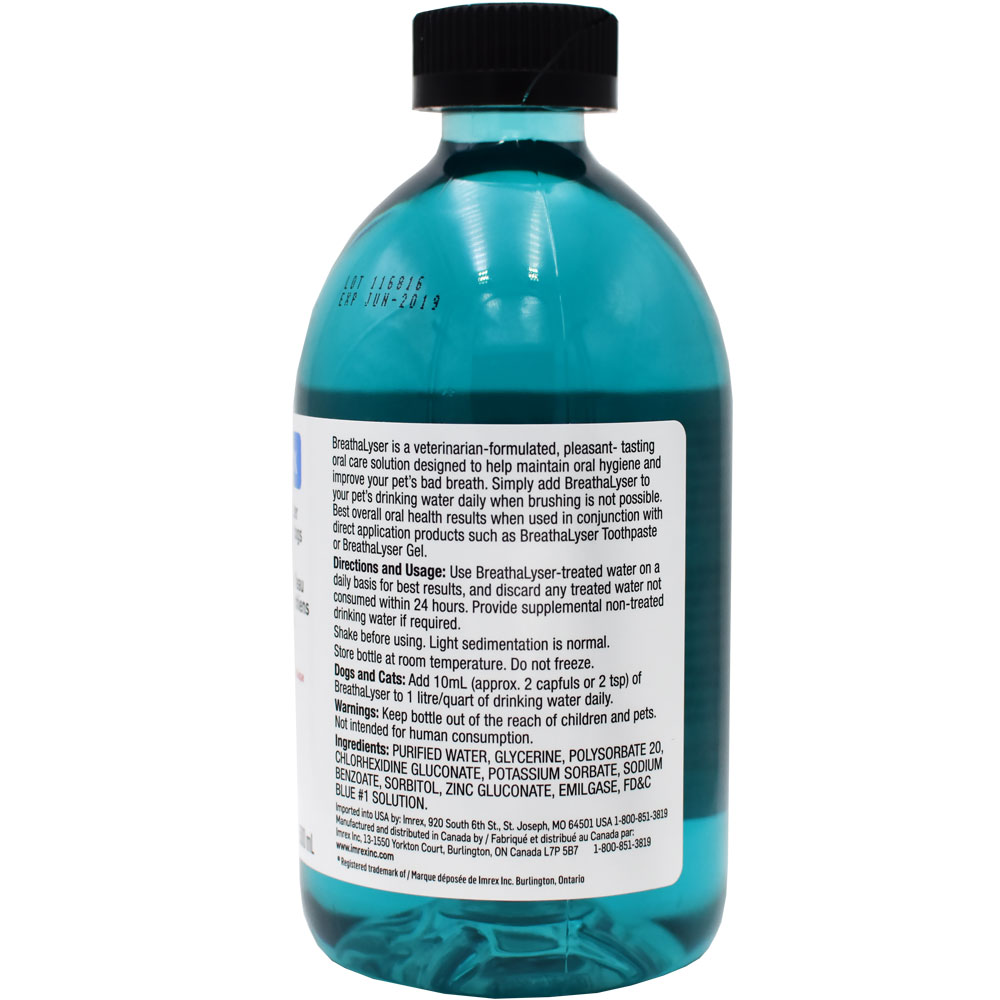
Use BreathaLyser Plus-treated water on a daily basis for best results, and discard any treated water not consumed within 24 hours. Provide supplemental non-treated drinking water if required.
Large Dog Breeds: Add 2 capfuls to at least 4 cups of drinking water daily.
Small Dog Breeds & Cats: Add 1 capful to a minimum of 2 cups of drinking water daily.
Mix fresh BreathaLyser solution daily & discard if not consumed within 24 hours. Provide supplemental fresh non-treated drinking water if required.
Shake before using. Light sedimentation is normal.
Store bottle at room temperature. Do not freeze.
Warning:
Keep out of reach of children. Not intended for human consumption.
92.31% Recommend this product (24 of 26 responses)
By Michael E.
OR
Great Stuff-It really works!
April 28, 2021
Over the last 20 years we've had six corgi dogs (currently have two) All of them have had Breathalser in their water dish and all of them have sweet breath and minimal teeth tartar. The Stuff Really Works!
By David
Livingston, Texas
good for doggies' breath and teeth
June 29, 2016
Have used this product several times and seems to work as stated. Happy with product.
By jules
East Providence, RI
very good product
March 31, 2016
I would recommend this product, it works.
By Jeffrey
Ohio Willoughby
breath plus
August 20, 2015
Do not want to brush my cats teeth so this product is perfect. My cat does not know it is in the water.
By Sassi
Florida
Excellent for Dental Care
August 3, 2014
Both my cats and my dog drink water with Breathalyser Plus water additive. Their breath is fresh and it seems to be helping the tartar along with the dry food. I have been using it for several years. Sassi
By JJ A.
Some help...
March 16, 2014
Our dog's breath was somewhere between "tuna" and "dead animals." Yikes!This product was recommended by the kennel where we board her for vacations.I will say her breath is a bit better, but still pretty "doggy." Maybe there is no total cure.
By karolanne
Montreal, Quebec, Canada
Excellent product
October 2, 2013
Excellent product. My dogs like it. They continue to drink like usual and her teeth looks great. I combine with the gel and 1 brushing per week.
By LeeP
No longer skeptical!
June 17, 2013
So even as I was ordering this I didn't really think it would work. It has! Frisco's breath is much better and he already has reduced tartar on his teeth. I am a believer.
By catpatti
Roswell, GA
Good value.
March 14, 2013
Have mixed with my cats' water since receiving the product. They have no problem with drinking. There is no way to tell the efficacy of the product until a lot more time has gone by and they have vet check-ups.
By Marilyn
St. Louis
Hope it helps!
March 1, 2013
I ordered two of these as my vet suggested it after we had our dog's teeth cleaned. It's easy to use and I think once again is helping with the breathe problem. The vet says anything to help keep the teeth from getting a build up will help. Guess I will see at the end of the year if it did. I am going to do it for the year to see.
By MissJulie
South Bend, IN
Essential!
February 27, 2013
Wouldn't ever want to be without this fantastic product, really helps keep my elderly dog's teeth from accumulating so much buildup.
By smp1939
Florida
Helps teeth and breath
January 29, 2013
My dogs would not drink the water with this in it but they are super picky. I am sure it is a good product
By Mrbill
Delaware
Breathalyser PLUS Water Additive
January 9, 2013
We have three toys that had very bad breath. We started putting the product in their water every morning. Within two weeks we could smell a great difference in their breath.
By BirdmanOKC
Oklahoma City, OK
Breathalyser PLUS
November 14, 2012
Breathalyser PLUS is a wonderful product. I have used it for several years and it does make our pets breath fresher. I highly recommend it!
By ekcpeterson
Atlanta, GA
It certainly helps!
October 22, 2012
I definitely noticed a difference for my dog.
By Lynda W.
Va.
Did not help bad breath!
August 16, 2012
I was disappointed that this did not help my dogs breath. I put it in her water on a regular basis, but it just did not help her. From my experience, and after buying several products that are supposed to help with bad breath, I really think the only thing that is going to help is to have the dog/cats teeth cleaned.
By EL G.
Albuquerque, NM
The Best Of The Very Best...
July 30, 2012
The Breathalyser Plus Water Additive (500 mL) is an excellent product. It really does work in keeping the teeth of our 2 cats free of plaque and tartar.I also use PetzLife Oral Care Gel, which also helps to remove Plaque and Tartar. I also brush their teeth. This methodology to me is by far much cheaper than having to pay the Vet. $300.00 per cat to have their teeth cleaned.My wife and I are very impressed with the above products. They really do work.
By Re
Raleigh, NC
Breathalyser PLUS Water Additive (500 mL)
May 30, 2012
This product works well to protect your pet's teeth and gums and it helps with bad breath. I would recommend it to anyone that has the same problem I have, in that I cannot brush my dogs teeth. Too old, too tired!
By Carol
Martinez, CA
Product really works!
January 24, 2012
Great results in using this product for my 14 year old loving companion Cody! Noticed difference in less than a week. Tried other products before that did not make a difference. Highly recommend this product.
By bubbles95ca
Review for Breathalyser Water Additive (500 mL)
November 30, 2011
Works well. But goes fast because I have three dogs
By maggiemae
Belgium, WI
Works Great
October 26, 2011
Our vet had recommended a water additive to help fight plaque and bad breath after we had our dog's teeth professionally cleaned. We started using this product just a few days after the cleaning and have noticed that our dog still has fresh breath. She seems to like the additive and still drinks her water as usual.
By southstar
FLorida
Not recommended
October 25, 2011
Wasted money, and at this time money is precious. Dog would not drink this in the water even when recommended amount put into water was decreased.
By Dbltee
Anderson, In
This stuff really works!!
July 24, 2011
I purchased one bottle of the Breathalyser Plus and it worked wonders on my dogs teeth. I have an older dog that has really bad breath and this stuff is amazing. His teeth are cleaner, whiter and he doesn't have a breath issue. I have two other dogs that don't have the same issue, yet, and I want to hopefully prevent that.I ran out of this, so I purchased a cheaper product at a different pet place and thought it might do just as well as this product. Boy, was I ever wrong! So, I'm back and bought a six pack so I won't have to worry about running out for awhile. I won't make that mistake again. Thanks Breathalyser, this stuff really works!
By msbev
It Works!
June 9, 2011
I can not believe how well this stuffworks!Our little dog's teeth & mouth were black.He had bad breath.Within a week we began to see a difference &now when he yawns, we see white teeth & nomore bad breath!Please continue to carry this product. Wewere afraid that he might have a really bad toothbut that is not the case. I think we were blessedwith this product just in time!
By Marty
IT WORKS!
March 22, 2011
I bought this to try as my dog has real bad breath, teeth are fine, eats nothing but the best grain free dog food. so i said WTH i will try it,, in 1 day my dogs breath was just perfect, all my friends checked out her breath and all agreed it works, i just put 2 capfuls a day, as i have Rottis and they drinks lots of water. Buy it ,, IT WORKS
By K R.
Breathalyser PLUS
June 14, 2008
I have been using this product for the the past few years with my chihuahuas and my one rat terrier and it makes a signifcant difference in their breath and their plaque build up on their teeth. They love the taste of it in their water, actually prefer it over plain water. The chi's are really good chewers but not my rat terrier, and with out the additive in the water you can really tell a difference in his breath, even with brushing his teeth. It's a great product and I tell ll my friends to buy it for their animals absolutely!!! It is much less expensive on this website then any where else also!




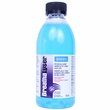 Breathalyser Water Additive (250 mL)Reg price: $14.99
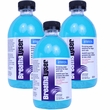 3-PACK Breathalyser Water Additive (1500 mL)Reg price: $70.99
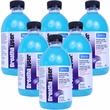 6-PACK Breathalyser Water Additive (3000 mL)Reg price: $140.99